One Hundred Ten and Never Again

English number words include numerals and various words derived from them, likewise as a large number of words borrowed from other languages.
Cardinal numbers [edit]
Primal numbers refer to the size of a group. In English, these words are numerals.
| 0 | zero (nought) | 10 | ten | ||
| i | 1 | 11 | eleven | ||
| 2 | two | 12 | twelve (a dozen) | 20 | 20 |
| three | 3 | xiii | thirteen (a baker's dozen) | thirty | xxx |
| 4 | four | 14 | fourteen | 40 | forty |
| 5 | five | 15 | fifteen | 50 | 50 |
| 6 | half dozen | 16 | 16 | 60 | sixty |
| 7 | 7 | 17 | seventeen | 70 | seventy |
| viii | eight | xviii | eighteen | 80 | eighty |
| 9 | nine | 19 | nineteen | ninety | ninety |
If a number is in the range 21 to 99, and the second digit is not zero, the number is typically written every bit two words separated by a hyphen.
| 21 | twenty-1 |
| 25 | xx-five |
| 32 | thirty-ii |
| 58 | fifty-viii |
| 64 | lx-four |
| 79 | seventy-nine |
| 83 | fourscore-three |
| 99 | ninety-nine |
In English, the hundreds are perfectly regular, except that the word hundred remains in its atypical form regardless of the number preceding it.
And then too are the thousands, with the number of thousands followed by the word "m". For the number one thousand it may be written one 000 or g or one,000, for larger numbers they are written for example ten 000 or ten,000 for ease of human reading[ example needed ]. The employ of the , as a separator is avoided in some languages[ commendation needed ] as it is used for a decimal placement, for instance with coin[ citation needed ]. Equally a result some style guides[ example needed ] recommend avoidance of the comma (,) as a separator and only to use the menstruum (.) as a decimal placement. Thus a half would be written 0.five in decimal, base of operations ten notation, and fifty yard as 50 000, and not l.000 nor 50,000 nor 50000. As the English language has no language academy to brand usage right in that location is still a wide variety of usage, other languages exercise accept language academies which ruled on these matters[ example needed ], notwithstanding their rulings are deprecated by international standards like the SI organisation or EU recommendations[ instance needed ] which leads to varied usage.
| one,000 | one m |
| 2,000 | two yard |
| ... | ... |
| ten,000 | ten one thousand or (rarely used) a myriad, which normally means an indefinitely big number. |
| 11,000 | 11 thousand |
| ... | ... |
| 20,000 | twenty m |
| 21,000 | twenty-one 1000 |
| 30,000 | thirty thousand |
| 85,000 | lxxx-five chiliad |
| 100,000 | one hundred grand or ane lakh (Indian English) |
| 999,000 | nine hundred and ninety-nine thousand (inclusively British English, Irish English, Australian English language, and New Zealand English) ix hundred xc-nine grand (American English) |
| 1,000,000 | one million |
| 10,000,000 | ten million or one crore (Indian English) |
In American usage, iv-digit numbers are often named using multiples of "hundred" and combined with tens and ones: "eleven hundred iii", "twelve hundred twenty-five", "forty-seven hundred forty-two", or "ninety-nine hundred ninety-nine." In British usage, this style is mutual for multiples of 100 between 1,000 and 2,000 (e.g. 1,500 as "fifteen hundred") but not for higher numbers.
Americans may pronounce four-digit numbers with non-zero tens and ones as pairs of two-digit numbers without maxim "hundred" and inserting "oh" for null tens: "xx-6 50-nine" or "forty-ane oh five". This usage probably evolved from the distinctive usage for years; "19-eighty-one", or from four-digit numbers used in the American telephone numbering system which were originally 2 messages followed by a number followed by a four-digit number, later by a three-digit number followed by the iv-digit number. It is avoided for numbers less than 2500 if the context may mean confusion with time of day: "10 10" or "twelve oh four".
Intermediate numbers are read differently depending on their utilise. Their typical naming occurs when the numbers are used for counting. Another way is for when they are used equally labels. The second column method is used much more often in American English than British English language. The third column is used in British English but rarely in American English (although the employ of the 2nd and third columns is not necessarily direct interchangeable between the ii regional variants). In other words, British English and American English language can seemingly agree, but it depends on a specific situation (in this example, bus numbers).[ citation needed ]
| Common British vernacular | Mutual American vernacular | Mutual British vernacular | |
| "How many marbles do you have?" | "What is your firm number?" | "Which motorbus goes to the High Street?" | |
| 101 | "A hundred and one." | "One-oh-ane." Hither, "oh" is used for the digit zippo. | "I-oh-ane." |
| 109 | "A hundred and ix." | "Ane-oh-ix." | "One-oh-nine." |
| 110 | "A hundred and ten." | "One-x." | "1-one-oh." |
| 117 | "A hundred and seventeen." | "Ane-seventeen." | "One-1-seven." |
| 120 | "A hundred and twenty." | "One-twenty." | "I-two-oh", "One-2-nil." |
| 152 | "A hundred and fifty-ii." | "Ane-50-ii." | "One-v-two." |
| 208 | "2 hundred and viii." | "Two-oh-eight." | "Two-oh-eight." |
| 394 | "3 hundred and ninety-four." | "Three-ninety-four." | "3-ninety-4." or "Three-ix-4." |
Note: When a check (or check) is written, the number 100 is always written "one hundred". Information technology is never "a hundred".
In American English, many students are taught[ example needed ],[ citation needed ] non to utilize the word and anywhere in the whole part of a number, so it is not used before the tens and ones. It is instead used every bit a verbal delimiter when dealing with compound numbers. Thus, instead of "three hundred and seventy-iii," "3 hundred seventy-three" would be said. Despite this dominion, some Americans use the and in reading numbers containing tens and ones as an alternative variant.
Very big numbers [edit]
For numbers above a meg, 3 main systems proper noun numbers in English (for the use of prefixes such as kilo- for a thousand, mega- for a million, milli- for a thousandth, etc. see SI units):
- the long calibration (formerly used in British English simply now less so) designates a system of numeric names in which a chiliad 1000000 is called a milliard, and billion is used for a million one thousand thousand. This arrangement is yet used in several other European languages.
- the brusque scale (ever used in American English and almost invariably in British English) designates a system of numeric names in which a thousand meg is called a billion, and the discussion milliard is not used.
- the Indian numbering organisation, used widely in Indian subcontinent.
Many people have no straight experience of manipulating numbers this large, and many non-American readers may interpret billion as ten12 (even if they are young plenty to have been taught otherwise at school); moreover, usage of the "long" billion is standard in some non-English speaking countries. For these reasons, defining the word may be appropriate when writing for the public.
| Number notation | Ability note | Brusque scale | Long scale | Indian (or Southward Asian) English |
|---|---|---|---|---|
| 1,000,000 | 10six | one million | one million | x lakh |
| i,000,000,000 | 109 | i billion a one thousand 1000000 | one milliard a thousand million | one hundred crore (one arab) |
| 1,000,000,000,000 | ten12 | ane trillion a thousand billion | one billion a million million | one lakh crore (x kharab) |
| one,000,000,000,000,000 | 1015 | one quadrillion a yard trillion | one billiard a thousand billion | 10 crore crore (one padm) |
| 1,000,000,000,000,000,000 | 10xviii | 1 quintillion a thousand quadrillion | one trillion a one thousand thousand billion | ten one thousand crore crore (10 shankh) |
| 1,000,000,000,000,000,000,000 | 1021 | one sextillion a g quintillion | one trilliard a k trillion | ane crore crore crore |
The numbers past one trillion in the short calibration, in ascending powers of g, are as follows: quadrillion, quintillion, sextillion, septillion, octillion, nonillion, decillion, undecillion, duodecillion, tredecillion, quattuordecillion, quindecillion, sexdecillion, septendecillion, octodecillion, novemdecillion and vigintillion (which is ten to the 63rd power, or a one followed by 63 zeros). The highest number in this series listed in modernistic dictionaries is centillion, which is 10 to the 303rd power.[ane] The interim powers of one thou betwixt vigintillion and centillion do not have standardized names, nor do any college powers, only there are many ad hoc extensions in utilise. The highest number listed in Robert Munafo'southward table of such unofficial names[2] is milli-millillion, which was coined as a proper name for 10 to the iii,000,003rd power.
The googolplex was oftentimes cited as the largest named number in English. If a googol is x to the i hundredth power, and so a googolplex is one followed past a googol of zeros (that is, ten to the power of a googol).[three] There is the coinage, of very niggling use, of x to the googolplex power, of the word googolplexplex.
The terms arab, kharab, padm and shankh are more than commonly plant in old books on Indian mathematics.
Here are some approximate blended big numbers in American English:
| Quantity | Written | Pronounced |
|---|---|---|
| 1,200,000 | 1.two million | one point 2 million |
| 3,000,000 | three million | three million |
| 250,000,000 | 250 million | two hundred fifty meg |
| 6,400,000,000 | vi.4 billion | six point four billion |
| 23,380,000,000 | 23.38 billion | twenty-three point three eight billion |
Often, large numbers are written with (preferably not-breaking) one-half-spaces or thin spaces separating the thousands (and, sometimes, with normal spaces or apostrophes) instead of commas—to ensure that confusion is not acquired in countries where a decimal comma is used. Thus, a one thousand thousand is oftentimes written 1 000 000.
In some areas, a point (. or ·) may also be used as a thousands separator, just then the decimal separator must be a comma (,). In English language the point (.) is used as the decimal separator, and the comma (,) as the thousands separator.
Special names [edit]
Some numbers have special names in improver to their regular names, well-nigh depending on context.
- 0:
- zero: formal scientific usage
- nought: mostly British usage, common in science to refer to subscript 0 indicating an initial land
- null: archaic term for nothingness, which may or may not be equivalent to the number; mostly American usage, old-fashioned spelling of nought
- aught: proscribed only still occasionally used when a digit is 0 (equally in "thirty-zilch-six", the .xxx-06 Springfield rifle cartridge and past clan guns that fire it). Aughts also refers to the decade of 2000-2009 in American English.
- oh: used when spelling numbers (similar telephone, depository financial institution account, bus line [British: bus route]) simply tin can crusade defoliation with the alphabetic character o if reading a mix of numbers and letters
- nil: in general sport scores, British usage ("The score is two–nil.")
- zilch: in general sport scores, American usage ("The score is two–nothing.")
- nada: to an object or idea related to nothingness. The 0th aleph number ( ) is pronounced "aleph-zip".
- beloved: in tennis, badminton, squash and similar sports (origin disputed, said by the Oxford English Dictionary to be from the idea that when ane does a thing "for beloved", that is for no monetary gain, the word "love" implies "nada". The previously held belief that information technology originated from French: fifty'œuf, lit.'the egg', due to its shape, is no longer widely accepted)
- zilch, nada (from Spanish), zero: used informally when stressing pettiness; this is truthful particularly in combination with one another ("You lot know cipher—zero, zilch, nada , zilch!"); American usage
- nix: also used as a verb; mostly American usage
- cypher / cipher: archaic, from French chiffre , in turn from Arabic sifr , meaning nix
- goose egg (breezy)
- duck (used in cricket when a batsman is dismissed without scoring)
- blank the half of a domino tile with no pips
- i:
- ace in certain sports and games, every bit in lawn tennis or golf game, indicating success with ane stroke, and the face up of a dice, playing card or domino half with i pip
- baboon in golf game denotes one stroke less than par, and bogey, one stroke more than par
- solo
- unit of measurement
- linear the degree of a polynomial is 1; too for explicitly cogent the commencement power of a unit: linear metre
- unity in mathematics
- protagonist first role player in theatre of Ancient Greece, similarly Proto-Isaiah and proton
- 2:
- couple
- brace, from One-time French "arms" (the plural of arm), as in "what tin exist held in ii arms".
- pair
- deuce the face of a die, playing card or domino half with two pips
- hawkeye in golf denotes two strokes less than par
- duo
- quadratic the degree of a polynomial is 2
- besides square or squared for cogent the second power of a unit: square metre or metre squared
- penultimate, second from the cease
- deuteragonist 2nd player in theatre of Ancient Hellenic republic, similarly Deutero-Isaiah and deuteron
- iii:
- trey the confront of a die or playing card with iii pips, a three-signal field goal in basketball, nickname for the 3rd carrier of the same personal name in a family
- trio
- trips: three-of-a-kind in a poker hand. a player has 3 cards with the same numerical value
- cubic the degree of a polynomial is three
- as well cube or cubed for denoting the tertiary power of a unit of measurement: cubic metre or metre cubed
- boundness in golf denotes three strokes less than par. Sometimes called double eagle
- hat-fox or lid fox: achievement of three feats in sport or other contexts[four]
- antepenultimate third from the end
- tritagonist third histrion in theatre of Ancient Greece, similarly Trito-Isaiah and triton
- turkey in bowling, three sequent strikes
- four:
- cater: (rare) the face of a die or playing card with four pips
- quartet
- quartic or biquadratic the degree of a polynomial is iv
- quad (brusque for quadruple or the like) several specialized sets of four, such as four of a kind in poker, a carburetor with four inputs, etc.,
- condor in golf game denotes four strokes less than par
- preantepenultimate 4th from the end
- 5:
- cinque or cinq (rare) the face up of a die or playing card with five pips
- quintet
- nickel (informal American, from the value of the five-cent US nickel, merely applied in non-monetary references)
- quintic the degree of a polynomial is 5
- quint (short for quintuplet or the like) several specialized sets of five, such as quintuplets, etc.
- 6:
- one-half a dozen
- sice (rare) the face of a die or playing card with 6 pips
- sextet
- sextic or hectic the degree of a polynomial is half dozen
- vii:
- septet
- septic or heptic the degree of a polynomial is vii
- viii:
- octet
- 9:
- nonet
- ten:
- dime (informal American, from the value of the x-cent United states of america dime, but applied in not-monetary references)
- decet
- decade, used for years but too other groups of 10 as in rosary prayers or Braille symbols
- 11: a broker'south dozen
- 12: a dozen (first power of the duodecimal base), used generally in commerce
- 13: a baker's dozen
- 20: a score (first power of the vigesimal base of operations), nowadays primitive; famously used in the opening of the Gettysburg Address: "Four score and seven years ago..." The Number of the Beast in the King James Bible is rendered "Vi hundred threescore and six". Too in The Volume of Mutual Prayer, Psalm 90 as used in the Burying Service—"The days of our historic period are threescore years and x; ...."
- l: half-century, literally one-half of a hundred, usually used in cricket scores.
- 55: double-nickel (informal American)
- threescore: a shock: historical commercial count, described as "iii scores".[5]
- 100:
- A century, likewise used in cricket scores and in cycling for 100 miles.
- A ton, in Republic English, the speed of 100 mph[six] or 100 km/h.
- A small-scale hundred or brusque hundred (primitive, see 120 below)
- 120:
- A corking hundred or long hundred (twelve tens; as opposed to the small hundred, i.east. 100 or x tens), besides called small gross (ten dozens), both archaic
- Also sometimes referred to as duodecimal hundred, although that could literally likewise mean 144, which is twelve squared
- 144: a gross (a dozen dozens, second power of the duodecimal base), used generally in commerce
- 500: a ream
- chiliad:
- a yard, colloquially used especially when referring to money, also in fractions and multiples, e.thou. one-half a grand, ii grand, etc. Grand tin also be shortened to "Grand" in many cases.
- K, originally from the abbreviation of kilo-, east.g. "He only makes $20K a year."
- Millennium (plural: millennia), a menstruation of one thousand years.
- kilo- (Greek for "one thousand"), a decimal unit of measurement prefix in the Metric organization denoting multiplication by "one thousand". For instance: 1 kilometre = one thousand metres.
- 1728: a slap-up gross (a dozen gross, 3rd ability of the duodecimal base of operations), used historically in commerce
- 10,000: a myriad (a hundred hundred), commonly used in the sense of an indefinite very high number
- 100,000: a lakh (a hundred thousand), in Indian English language
- ten,000,000: a crore (a hundred lakh), in Indian English and written as 100,00,000.
- 10100: googol (1 followed by 100 zeros), used in mathematics
- 10googol: googolplex (1 followed by a googol of zeros)
- 10googolplex: googolplexplex (1 followed by a googolplex of zeros)

Combinations of numbers in most sports scores are read as in the post-obit examples:
- 1–0 British English: one-nix; American English: one-zippo, one-zip, or one-nil
- 0–0 British English: nil-naught or nothing all; American English: zero-aught or nothing-nothing, (occasionally scoreless or no score)
- ii–2 two-two or 2 all; American English also twos, ii to two, even at ii, or two up.
Naming conventions of Tennis scores (and related sports) are unlike from other sports.
The centuries of Italian civilisation accept names in English borrowed from Italian:
- duecento "(one thousand and) two hundred" for the years 1200 to 1299, or approximately 13th century
- trecento 14th century
- quattrocento 15th century
- cinquecento 16th century
- seicento 17th century
- settecento 18th century
- ottocento 19th century
- novecento 20th century
When reading numbers in a sequence, such as a telephone or serial number, British people will usually use the terms double followed by the repeated number. Hence 007 is double oh seven. Exceptions are the emergency phone number 999, which is e'er nine 9 nine and the apocalyptic "Number of the Fauna", which is always six six half-dozen. In the United states of america, 911 (the US emergency telephone number) is usually read nine one one, while 9/11 (in reference to the September eleven, 2001, attacks) is usually read nine eleven.
Multiplicative adverbs and adjectives [edit]
A few numbers have specialised multiplicative numbers (adverbs), also called adverbial numbers, which express how many times some result happens:
| one fourth dimension | in one case |
| two times | twice |
| three times | thrice (largely obsolete) |
Compare these specialist multiplicative numbers to limited how many times some thing exists (adjectives):
| × ane | lone | atypical | 1-off |
| × two | double | twofold | duplicate |
| × 3 | triple | threefold | triplicate |
| × 4 | quadruple | fourfold | |
| × 5 | quintuple | fivefold | |
| × 6 | sextuple, hextuple | sixfold | |
| × 7 | septuple, heptuple | sevenfold | |
| ×100 | ..... | hundredfold |
English besides has some multipliers and distributive numbers, such as singly.
Other examples are given in the Specialist Numbers.
Negative numbers [edit]
The name of a negative number is the name of the corresponding positive number preceded past "minus" or (American English) "negative". Thus −5.2 is "minus 5 point ii" or "negative v signal two". For temperatures, Due north Americans colloquially say "below"—brusque for "below zero"—and then a temperature of −5° is "5 beneath" (in contrast, for example, to "two above" for 2°). This is occasionally used for emphasis when referring to several temperatures or ranges both positive and negative. This is peculiarly mutual in Canada where the utilise of Celsius in weather condition forecasting means that temperatures tin can regularly drift above and below zip at certain times of twelvemonth.
Ordinal numbers [edit]
Ordinal numbers refer to a position in a series. Common ordinals include:
| 0th | zeroth or (rarely) noughth (see below) | tenth | tenth | ||
| 1st | first | 11th | eleventh | ||
| 2nd | second | 12th | twelfth | 20th | twentieth |
| 3rd | tertiary | 13th | thirteenth | 30th | thirtieth |
| 4th | fourth | 14th | fourteenth | 40th | fortieth |
| 5th | 5th | 15th | fifteenth | 50th | fiftieth |
| 6th | sixth | 16th | sixteenth | 60th | sixtieth |
| seventh | seventh | 17th | seventeenth | 70th | seventieth |
| 8th | eighth | 18th | eighteenth | 80th | eightieth |
| 9th | 9th | 19th | nineteenth | 90th | ninetieth |
Zeroth only has a meaning when counting starts with zero, which happens in a mathematical or informatics context. Ordinal numbers predate the invention of zero and positional notation.
Ordinal numbers such as 21st, 33rd, etc., are formed by combining a cardinal ten with an ordinal unit.
| 21st | twenty-first |
| 25th | twenty-fifth |
| 32nd | 30-second |
| 58th | fifty-eighth |
| 64th | sixty-fourth |
| 79th | seventy-ninth |
| 83rd | lxxx-3rd |
| 99th | ninety-ninth |
Higher ordinals are not frequently written in words, unless they are round numbers (thousandth, millionth, billionth). They are written with digits and messages as described below. Some rules should be borne in listen.
- The suffixes -thursday, -st, -nd and -rd are occasionally written superscript above the number itself.
- If the tens digit of a number is 1, then "th" is written later on the number. For example: 13th, 19th, 112th, 9,311th.
- If the tens digit is not equal to 1, so the following table could exist used:
| If the units digit is: | 0 | 1 | 2 | 3 | 4-9 |
| This is written after the number | th | st | nd | rd | th |
- For example: second, seventh, 20th, 23rd, 52nd, 135th, 301st.
These ordinal abbreviations are actually hybrid contractions of a numeral and a word. 1st is "1" + "st" from "first". Similarly, "nd" is used for "second" and "rd" for "third". In the legal field and in some older publications, the ordinal abridgement for "2d" and "third" is simply "d".
- For example: 42d, 33d, 23d.
NB: "D" all the same often denotes "second" and "third" in the numeric designations of units in the US armed forces, for example, 533d Squadron, and in legal citations for the second and third series of case reporters.
Dates [edit]
There are a number of ways to read years. The post-obit table offers a list of valid pronunciations and alternate pronunciations for any given yr of the Gregorian calendar.
| Yr | Most mutual pronunciation method | Alternative methods |
|---|---|---|
| 1 BC | (The year) Ane BC | (The twelvemonth) One BCE[notation i] |
| 1 | The yr One | (The yr) One CE[note 2] Advertizement I[notation 3] |
| 235 | Ii thirty-v | Two-three-five Ii hundred (and) 30-five |
| 911 | Nine eleven | Nine-ane-one Ix hundred (and) eleven |
| 999 | Nine 90-9 | Nine-nine-9 Nine hundred (and) 90-nine |
| grand | Ane m | Ten hundred 1K |
| 1004 | One one thousand (and) 4 | Ten oh-4 |
| 1010 | Ten ten | One thou (and) ten |
| 1050 | X fifty | I thou (and) fifty |
| 1225 | Twelve twenty-five | 1-two-two-five One yard, ii hundred (and) twenty-five Twelve-two-five |
| 1900 | Nineteen hundred | One thousand, nine hundred Nineteen zero |
| 1901 | Nineteen oh-one | Xix hundred (and) one One thousand, nine hundred (and) one Nineteen aught one |
| 1919 | Nineteen nineteen | Nineteen hundred (and) nineteen One chiliad, 9 hundred (and) nineteen |
| 1999 | Nineteen ninety-nine | 19 hundred (and) xc-nine One thousand, 9 hundred (and) ninety-nine |
| 2000 | Two 1000 | Twenty hundred Two triple-oh Y2K |
| 2001 | Two thousand (and) one | 20 oh-i Twenty hundred (and) one Two double-oh-i Two oh-oh-one |
| 2009 | Two g (and) nine | Twenty oh-9 20 hundred (and) nine Two double-oh-nine 2 oh-oh-9 |
| 2010 | 20 ten[7] | Twenty hundred (and) ten two-oh-one-oh Two thousand (and) ten |
- ^ Before the Common era.
- ^ of the Common era.
- ^ Anno Domini One ("In the year I of our Lord") is sometimes written 1 Advert.
Twelve 30-four would be the norm on both sides of the Atlantic for the year 1234. The years 2000 to 2009 are most often read every bit 2 thousand, two thousand (and) ane and the like by both British and American speakers. For years later 2009, twenty eleven, twenty fourteen, etc. are more common, fifty-fifty in years earlier than 2009 BC/BCE. Likewise, the years afterward 1009 (until 1099) are also read in the aforementioned fashion (eastward.chiliad. 1015 is either ten xv or, rarely, one thousand fifteen). Some Britons read years within the 1000s to 9000s BC/BCE in the American manner, that is, 1234 BC is read every bit twelve (hundred and) thirty-four BC, while 2400 BC tin can be read as either two thousand 4 hundred or twenty 4 hundred BC.
Collective numbers [edit]
Collective numbers are numbers that refer to a group of a specific size. Words like "pair" and "dozen" are mutual in English, though near are formally derived from Greek and Latin numerals, as follows:
| Group Size | Latin-derived | Colloquial |
|---|---|---|
| 1 | monad | |
| two | dyad, duad | pair |
| 3 | triad | |
| four | tetrad | |
| v | pentad | |
| 6 | hexad | |
| vii | heptad, hebdomad | |
| eight | octad, ogdoad | |
| 9 | nonad, ennead | |
| x | decad, decade | |
| xi | hendecad | |
| 12 | dodecad, duodecade | dozen |
| m | chiliad |
Fractions and decimals [edit]
Numbers used to announce the denominator of a fraction are known linguistically as "partitive numerals." In spoken English, ordinal numerals and partitive numerals are identical with a few exceptions. Thus "5th" can mean the element betwixt fourth and sixth, or the fraction created past dividing the unit into five pieces. When used as a partitive numeral, these forms tin can be pluralized: one seventh, two sevenths. The sole exceptions to this rule are sectionalization by 1, ii, and sometimes four: "first" and "second" cannot exist used for a fraction with a denominator of i or two. Instead, "whole" and "half" (plural "halves") are used. For a fraction with a denominator of iv, either "fourth" or "quarter" may exist used.
Here are some common English language fractions, or partitive numerals:[viii]
| one i-hundredth | |
| two one-hundredths | |
| three one-hundredths | |
| one two-hundredth | |
| two ii-hundredths | |
| 3 two-hundredths | |
| 1 sixteenth | |
| or 0.i | one 10th |
| one 8th | |
| or 0.2 | two tenths or one fifth |
| ane quarter or i 4th | |
| or 0.iii | iii tenths |
| one third | |
| three eighths | |
| or 0.4 | 4 tenths or two fifths |
| one half | |
| or 0.half dozen | six tenths or three fifths |
| five eighths | |
| 2 thirds | |
| or 0.7 | vii tenths |
| three quarters or three fourths | |
| or 0.viii | 8 tenths or four fifths |
| seven eighths | |
| or 0.9 | ix tenths |
| fifteen sixteenths |


Alternatively, and for greater numbers, one may say for ane/2 "i over two", for 5/8 "five over eight", and and so on. This "over" form is also widely used in mathematics.
Fractions together with an integer are read as follows:
- 1½ is "one and a half"
- vi¼ is "six and a quarter"
- 7⅝ is "7 and five eighths"
A space is required between the whole number and the fraction; withal, if a special fraction character is used similar "½", then the space can be done without, e.g.
- 9 1/2
- 9½
Numbers with a decimal indicate may exist read equally a cardinal number, and so "and", and then another cardinal number followed past an indication of the significance of the second fundamental number (mainly U.S.); or equally a fundamental number, followed by "point", and and then past the digits of the fractional part. The indication of significance takes the class of the denominator of the fraction indicating division past the smallest ability of ten larger than the second cardinal. This is modified when the first cardinal is aught, in which case neither the goose egg nor the "and" is pronounced, just the zero is optional in the "point" grade of the fraction.
Some American and Canadian schools teach students to pronounce decimaly written fractions (for example, .5) as though they were longhand fractions (v tenths), such as thirteen and seven tenths for xiii.vii. This formality is ofttimes dropped in common speech and is steadily disappearing in instruction in mathematics and scientific discipline also as in international American schools. In the U.Yard., and among almost North Americans, 13.7 would be read thirteen point seven.
For case:
- 0.002 is "betoken zero zero ii", "indicate oh oh two", "nought point zero zilch 2", etc.; or "two thousandths" (U.Due south., occasionally)
- three.1416 is "three point ane four i six"
- 99.3 is "ninety-ix betoken three"; or "ninety-9 and iii tenths" (U.S., occasionally).
In English language the decimal point was originally printed in the eye of the line (0·002), only with the advent of the typewriter information technology was placed at the lesser of the line, and so that a single key could be used equally a full finish/menses and equally a decimal indicate. In many non-English language languages a total-end/period at the lesser of the line is used as a thousands separator with a comma beingness used every bit the decimal point.
Whether or not digits or words are used [edit]
With few exceptions, most grammatical texts rule that the numbers cipher to nine inclusive should be "written out" – instead of "i" and "two", ane would write "one" and "two".[9]
- Instance: "I take two apples." (Preferred)
- Example: "I have 2 apples."
Subsequently "nine", one tin can head straight back into the 10, xi, 12, etc., although some write out the numbers until "twelve".
- Example: "I have 28 grapes." (Preferred)
- Example: "I take twenty-eight grapes."
Another common usage is to write out any number that can be expressed as 1 or 2 words, and use figures otherwise.
- Examples:
- "There are six 1000000 dogs." (Preferred)
- "There are 6,000,000 dogs."
- "That is ane hundred and twenty-five oranges." (British English)
- "That is one hundred 20-five oranges." (U.s.-American English)
- "That is 125 oranges." (Preferred)
Numbers at the first of a sentence should too be written out, or the sentence rephrased.
The to a higher place rules are not always followed. In literature, larger numbers might be spelled out. On the other mitt, digits might be more than commonly used in technical or fiscal articles, where many figures are discussed. In detail, the two different forms should non exist used for figures that serve the same purpose; for example, it is inelegant to write, "Betwixt twenty-four hours twelve and day 15 of the study, the population doubled."
Empty numbers [edit]
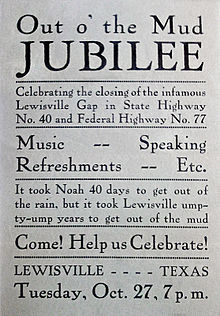
Vernacular English's small vocabulary of empty numbers can be employed when there is uncertainty equally to the precise number to utilize, but information technology is desirable to define a full general range: specifically, the terms "umpteen", "umpty", and "zillion". These are derived etymologically from the range affixes:
- "-teen" (designating the range as being between 13 and xix inclusive)
- "-ty" (designating the range every bit being between 20 and 90 inclusive)
- "-illion" (designating the range as being above 1,000,000; or, more generally, as existence extremely large).
The prefix "ump-" is added to the beginning two suffixes to produce the empty numbers "umpteen" and "umpty": it is of uncertain origin. A noticeable absence of an empty number is in the hundreds range.
Usage of empty numbers:
- The word "umpteen" may exist used as an adjective, as in "I had to become to umpteen stores to discover shoes that fit." Information technology can too be used to alter a larger number, ordinarily "million", equally in "Umpteen 1000000 people watched the show; but they nevertheless cancelled it."
- "Umpty" is non in common usage. Information technology can announced in the form "umpty-1" (paralleling the usage in such numbers equally "20-ane"), equally in "There are umpty-i ways to do information technology incorrect." "Umpty-ump" is also heard, though "ump" is never used past itself.
- The word "zillion" may be used as an adjective, modifying a noun. The noun phrase normally contains the indefinite article "a", as in "There must be a zillion pages on the Www."
- The plural "zillions" designates a number indefinitely larger than "millions" or "billions". In this case, the construction is parallel to the 1 for "millions" or "billions", with the number used every bit a plural count noun, followed by a prepositional phrase with "of", as in "In that location are zillions of grains of sand on the beaches of the globe."
- Empty numbers are sometimes made upward, with obvious meaning: "squillions" is apparently an empty, just very big, number; a "squintillionth" would be a very modest number.
- Some empty numbers may be modified by actual numbers, such every bit "iv zillion", and are used for jest, exaggeration, or to relate abstractly to actual numbers.
- Empty numbers are colloquial, and primarily used in oral speech or informal contexts. They are inappropriate in formal or scholarly usage.
See too Placeholder proper noun.
See as well [edit]
- Indefinite and fictitious numbers
- Listing of numbers
- Long and brusk scales
- Names of large numbers
- Natural number
- Number prefixes and their derivatives
- Convert numbers to words
References [edit]
- ^ Webster's Third New International Dictionary, Entire, 1993, Merriam-Webster
- ^ "Large Numbers at MROB".
- ^ "Home - Yahoo Answers".
- ^ "Hat pull a fast one on, north.". Oxford English Dictionary. Oxford University Press. Retrieved 26 December 2014.
- ^ "Shock, north.2". Oxford English language Lexicon. Oxford University Printing. Retrieved 26 December 2014.
- ^ "the definition of ton".
- ^ "How Do You Say 2010?".
- ^ "What is a partitive numeral?".
- ^ Gary Blake and Robert Due west. Bly, The Elements of Technical Writing, pg. 22. New York: Macmillan Publishers, 1993. ISBN 0020130856
External links [edit]
- English language Numbers - explanations, exercises and number generator (cardinal and ordinal numbers)
Source: https://en.wikipedia.org/wiki/English_numerals
0 Response to "One Hundred Ten and Never Again"
Post a Comment