How to Deliver Code to Customers to Upload on Arduino
Table of Contents
- Use your Arduino Uno on the Arduino Web IDE
- Utilize your Arduino Uno on the Arduino Desktop IDE
- Install the lath drivers
- Open your first sketch
- Select your board blazon and port
- Upload the program
- Learn more than on the Desktop IDE
- Tutorials
Getting Started with Arduino UNO
This document explains how to connect your Uno board to the computer and upload your offset sketch. The Arduino Uno is programmed using the Arduino Software (IDE), our Integrated Development Environment common to all our boards and running both online and offline. For more information on how to get started with the Arduino Software visit the Getting Started folio.
Apply your Arduino Uno on the Arduino Spider web IDE

All Arduino boards, including this one, work out-of-the-box on the Arduino Web Editor, you only need to install Arduino Create Agent to get started.
The Arduino Web Editor is hosted online, therefore it will always be up-to-date with the latest features and back up for all boards. Follow this simple guide to starting time coding on the browser and upload your sketches onto your board.
Use your Arduino Uno on the Arduino Desktop IDE
If y'all want to program your Arduino Uno while offline you lot need to install the Arduino Desktop IDE The Uno is programmed using the Arduino Software (IDE), our Integrated Evolution Environs common to all our boards. Earlier you can motility on, yous must accept installed the Arduino Software (IDE) on your PC, equally explained in the abode page of our Getting Started.
Connect your Uno board with an A B USB cable; sometimes this cable is called a USB printer cable
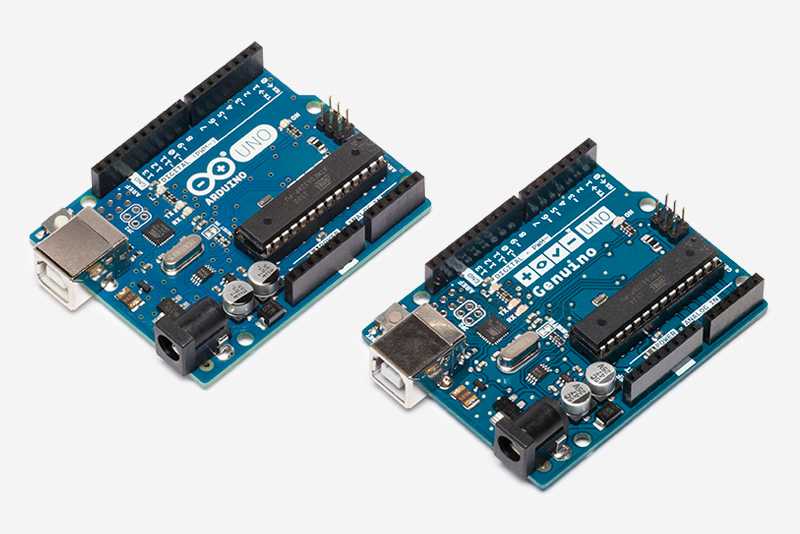
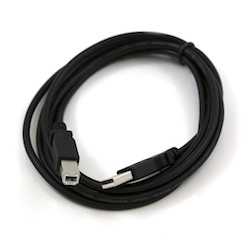
The USB connection with the PC is necessary to program the board and not merely to power it up. The Uno automatically draw power from either the USB or an external power supply. Connect the board to your computer using the USB cable. The green ability LED (labelled PWR) should become on.
Install the board drivers
If y'all used the Installer, Windows - from XP upward to 10 - will install drivers automatically as presently as you connect your board.
If you downloaded and expanded the Zip package or, for some reason, the board wasn't properly recognized, please follow the procedure below.
-
Click on the Start Menu, and open up the Command Panel.
-
While in the Control Panel, navigate to Arrangement and Security. Next, click on System. Once the System window is upwards, open the Device Managing director.
-
Look under Ports (COM & LPT). You should run into an open port named "Arduino UNO (COMxx)". If there is no COM & LPT section, look under "Other Devices" for "Unknown Device".
-
Right click on the "Arduino UNO (COmxx)" port and choose the "Update Driver Software" option.
-
Next, choose the "Browse my computer for Driver software" option.
-
Finally, navigate to and select the driver file named "arduino.inf", located in the "Drivers" folder of the Arduino Software download (not the "FTDI USB Drivers" sub-directory). If you are using an onetime version of the IDE (1.0.iii or older), choose the Uno driver file named "Arduino UNO.inf"
-
Windows will finish up the driver installation from there.
Come across also: step-by-step screenshots for installing the Uno under Windows XP.
Open up your commencement sketch
Open up the LED blink example sketch: File > Examples >01.Basics > Blink.
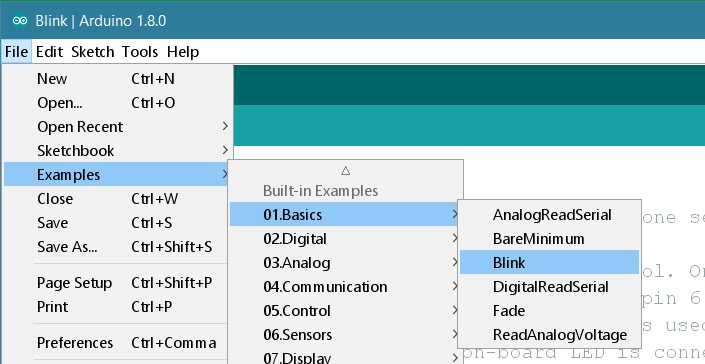
Select your board type and port
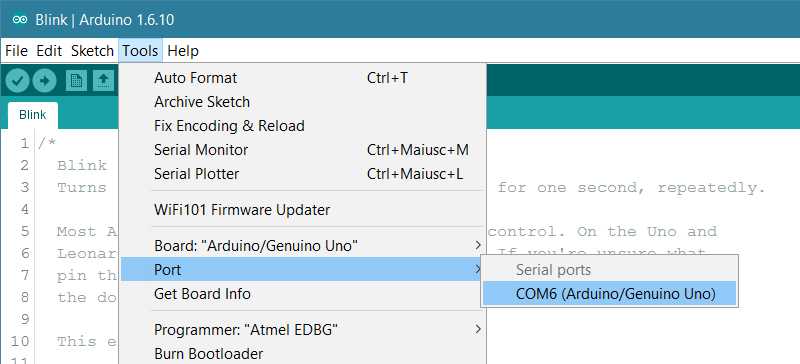
You'll demand to select the entry in the Tools > Board bill of fare that corresponds to your Arduino board.
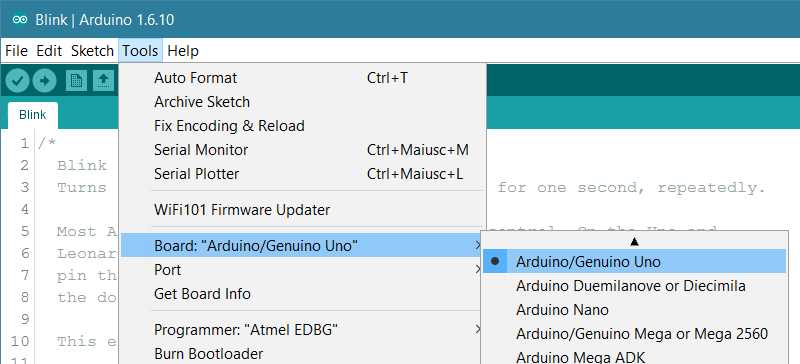
Select the serial device of the lath from the Tools | Series Port carte du jour. This is probable to exist COM3 or higher (COM1 and COM2 are usually reserved for hardware series ports). To find out, you can disconnect your board and re-open up the bill of fare; the entry that disappears should be the Arduino board. Reconnect the board and select that series port.
Upload the program
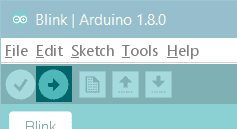
At present, simply click the "Upload" push in the surround. Wait a few seconds - y'all should see the RX and TX leds on the board flashing. If the upload is successful, the bulletin "Washed uploading." volition announced in the status bar.
A few seconds after the upload finishes, you should encounter the pin 13 (Fifty) LED on the lath kickoff to glimmer (in orange). If information technology does, congratulations! You've gotten Arduino upwardly-and-running. If you lot accept problems, please run into the troubleshooting suggestions.
Larn more on the Desktop IDE
See this tutorial for a generic guide on the Arduino IDE with a few more than infos on the Preferences, the Lath Managing director, and the Library Manager.
Tutorials
Now that you take set up and programmed your Uno board, you may notice inspiration in our Project Hub tutorial platform
or have a expect to the tutorial pages that explain how to use the various features of your board.
-
examples for using diverse sensors and actuators
-
reference for the Arduino linguistic communication
Source: https://www.arduino.cc/en/Guide/ArduinoUno/
0 Response to "How to Deliver Code to Customers to Upload on Arduino"
Post a Comment